Convergence Newsletter
Hi, I’m Lillian Pierson - growth strategist and fractional CMO for tech startups that want traction yesterday. I help founders ditch chaotic marketing and build revenue engines that actually scale. This isn’t just a newsletter, it’s The Convergence: a movement for founders who want data-driven, repeatable growth.Ready to lead the revolution? Join us.
Nov 25 • 4 min read
I thought “GTM engineering” was marketing BS. Then I found 89 startups hiring for it.
|
I’ll be honest, Reader: when I first heard “GTM Engineer,” I rolled my eyes so hard I nearly strained something. “GTM Engineering,” I thought, “give me a break.” It sounded like yet another attempt by marketers to rebrand themselves with a sexier title. You know the type: “growth hacker,” “revenue architect,” “demand generation ninja.” Just marketing people trying to sound technical without actually building anything. So I ignored it. For months. Then yesterday, I was researching outbound training. I can’t even remember why the term popped back into my head, but something made me search “GTM engineer” instead of just looking for sales playbooks. Here’s what I found:
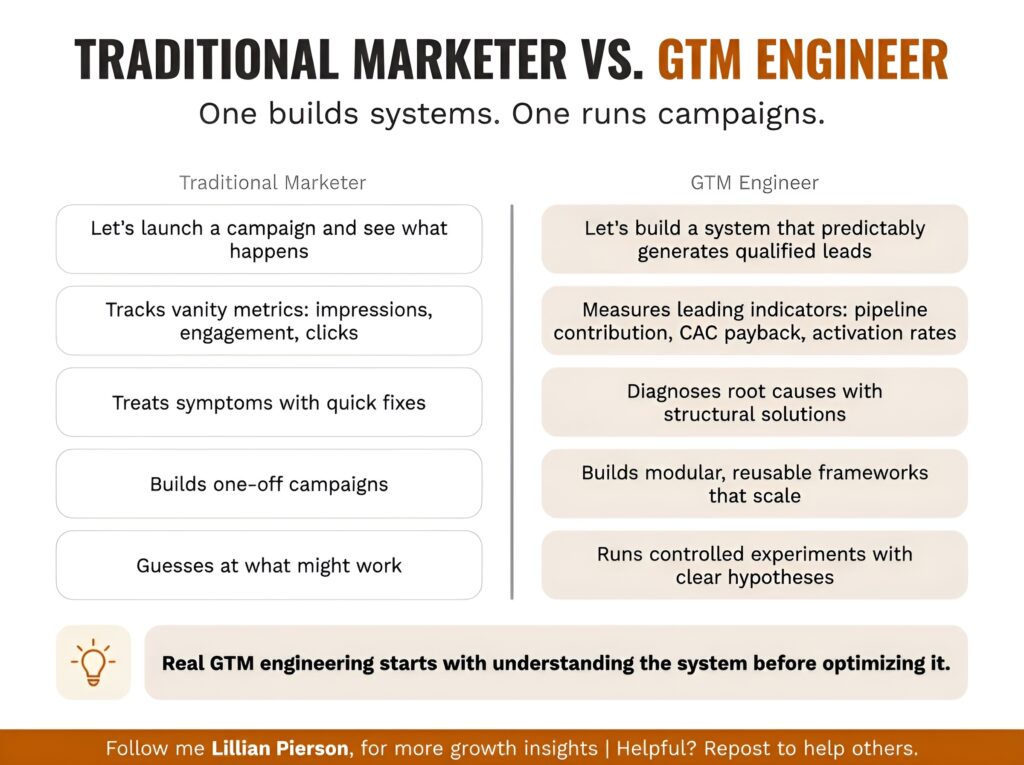
I stared at my screen for a solid minute. Then I did something I rarely do: I asked ChatGPT (which has memory of all the work I’ve done with clients) a simple question: “Am I a GTM engineer?” Its response: “Yes. You’ve been doing GTM engineering for years. You just didn’t call it that.” Holy cow. Turns out, I’m not just a licensed Professional Engineer of the environmental variety. I’m also, apparently, a GTM engineer. And if I didn’t know this role existed, I’m betting a lot of you don’t either. So here’s what I learned, why it matters, and how to know if you actually need one on your team. WTF is GTM Engineering? (And Why I Thought It Was Fake)Let’s start with why I was skeptical. The term sounds like marketing jargon. “GTM” (go-to-market) is already overused. Add “engineer” to it, and it feels like someone trying to make growth hacking sound more legitimate by borrowing credibility from actual engineering. But here’s the thing: it’s not marketing. It’s actually engineering for revenue systems. A GTM engineer doesn’t run ad campaigns or write blog posts (though they might build systems that do those things). They architect, test, and optimize the infrastructure that turns prospects into customers. Think of it like this:
It’s the difference between throwing spaghetti at the wall and running controlled experiments with clear hypotheses, instrumentation, and iteration loops.
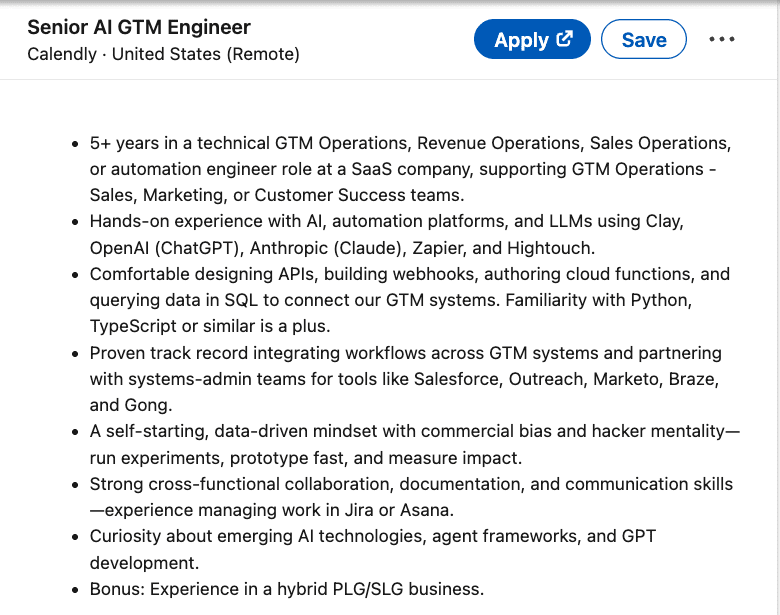
Here’s what actually convinced me this is real: I looked at the job postings. Not the titles, but the actual requirements. Here’s what companies are hiring for: From a Senior AI GTM Engineer role at Calendly:
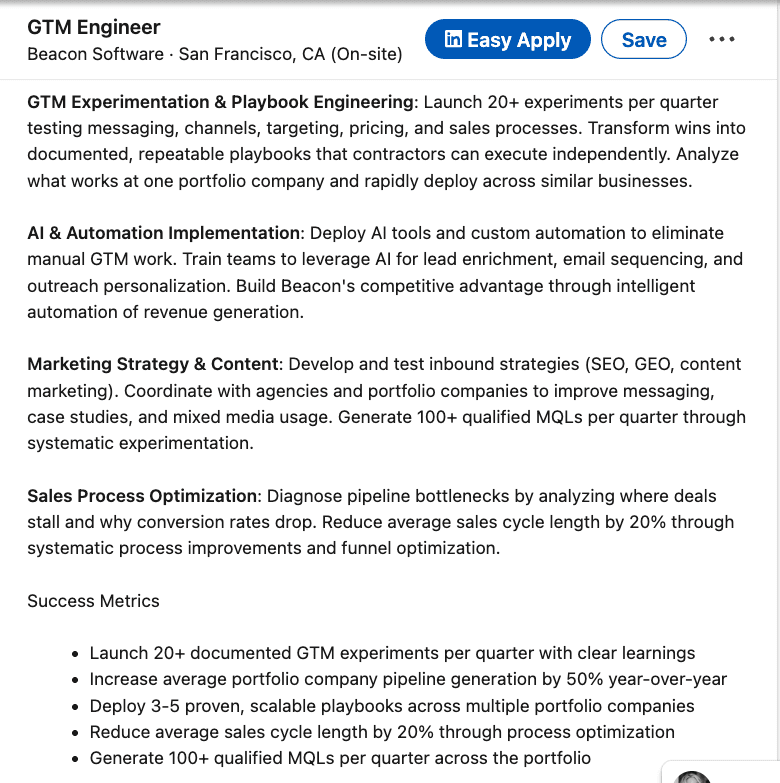
From a GTM Engineer role at Beacon Software:
These aren’t marketing jobs. These are systems engineering jobs for revenue operations. And suddenly, I realized: this is exactly what I’ve been doing for clients. I just called it “fractional CMO work” or “growth strategy.” How I’ve Been a GTM Engineer Without Knowing ItLet me show you what I mean with two recent projects. Case Study 1: AI Consulting Startup – $5,160/Month Saved, 8x Faster Execution
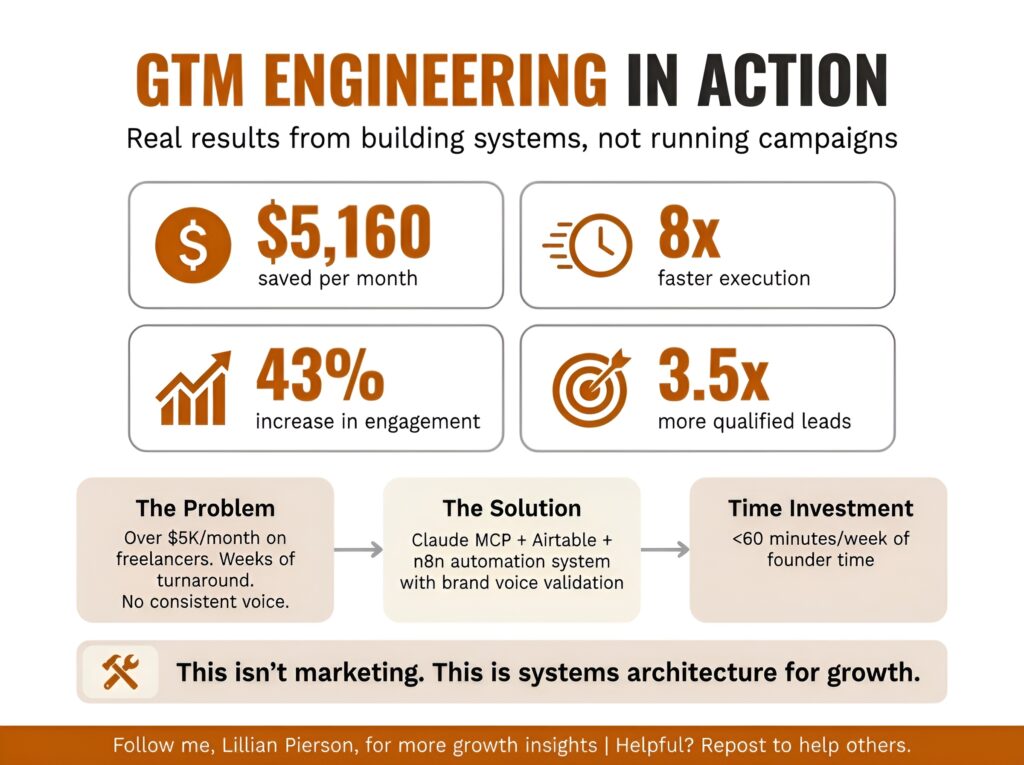
A fast-growing AI consulting startup was spending over $5K/month on freelancers to create content. The founder would record a video or send bullet points, then wait days (sometimes weeks) for polished LinkedIn posts, emails, and short-form video scripts to come back. The bottleneck: Manual handoffs. No consistent voice. Slow turnaround. Expensive execution. My GTM engineering approach: I built a custom Claude MCP agent integrated with Airtable that auto-generates multi-channel content from founder-recorded videos or bullet docs. The system pulls brand voice guidelines, case studies, and positioning frameworks from a structured database (Airtable), runs them through Claude with custom prompts, and outputs LinkedIn posts, email sequences, and video scripts. All in the founder’s voice. I connected it with n8n for workflow automation so the system runs without the founder touching it. Results:
This isn’t marketing. This is systems architecture for growth. I diagnosed the bottleneck (manual execution), designed a modular solution (Claude MCP + Airtable + n8n), instrumented it with quality checks, and optimized for repeatability. That’s GTM engineering. What Real Engineers Bring That Marketers Don’tHere’s the thing most people calling themselves “GTM engineers” get wrong: they’re not actually engineers. While most "GTM engineers" are growth marketers borrowing engineering language, I'm an actual engineer who happens to build revenue systems.Turns out, there's a name for that now. Read the full story in my blog post for this week.
All the best, Lillian Pierson Growth Partner & Fractional CMO P.S. How did a P.E. accidentally became a GTM Engineer? Well, I spent the first part of my career designing environmental systems: wastewater treatment, pollution control, infrastructure optimization. Then I pivoted into marketing and growth, thinking I was leaving engineering behind. Turns out, I never left. I just started applying the same principles: systems thinking, root cause analysis, constraint optimization, measurement, iteration. To a different domain: revenue generation. When that ChatGPT conversation told me “You’ve been doing GTM engineering for years,” it wasn’t validating a job title. It was validating an entire approach. The best part? My engineering background is my unfair advantage. While most marketers are guessing, I’m building. While they’re chasing trends, I’m diagnosing. While they’re celebrating vanity metrics, I’m tracking pipeline. So if you’re a founder wondering whether you need a GTM engineer, or whether the person calling themselves one is legit, ask yourself this: Are they building systems, or are they just rebranding marketing? Because there’s a huge difference. And if you want someone who actually engineers growth, not just talks about it, let’s talk.
P.P.S. Founding-member pricing ($35 instead of $592) ends Nov 17 at 9 am ET. Once it's gone, this price never comes back. |
Hi, I’m Lillian Pierson - growth strategist and fractional CMO for tech startups that want traction yesterday. I help founders ditch chaotic marketing and build revenue engines that actually scale. This isn’t just a newsletter, it’s The Convergence: a movement for founders who want data-driven, repeatable growth.Ready to lead the revolution? Join us.